

Piano & Heavy Item Removals in Darwin
Uprights, grands, pool tables, gun safes and gym gear moved on proper trolleys and skids, with the crew size set by the access rather than the item. Fixed quote from photos.
Here the hard part is almost never the truck. It is a long external staircase with no landing to rest 300 kilos on, and a wet season that treats a piano very differently from a southern lounge room.
What's included in a heavy item move
One price before we arrive, crew sized to the access.
- An access check from your photos before it is booked
- Crew sized to the job, two for an upright, more where needed
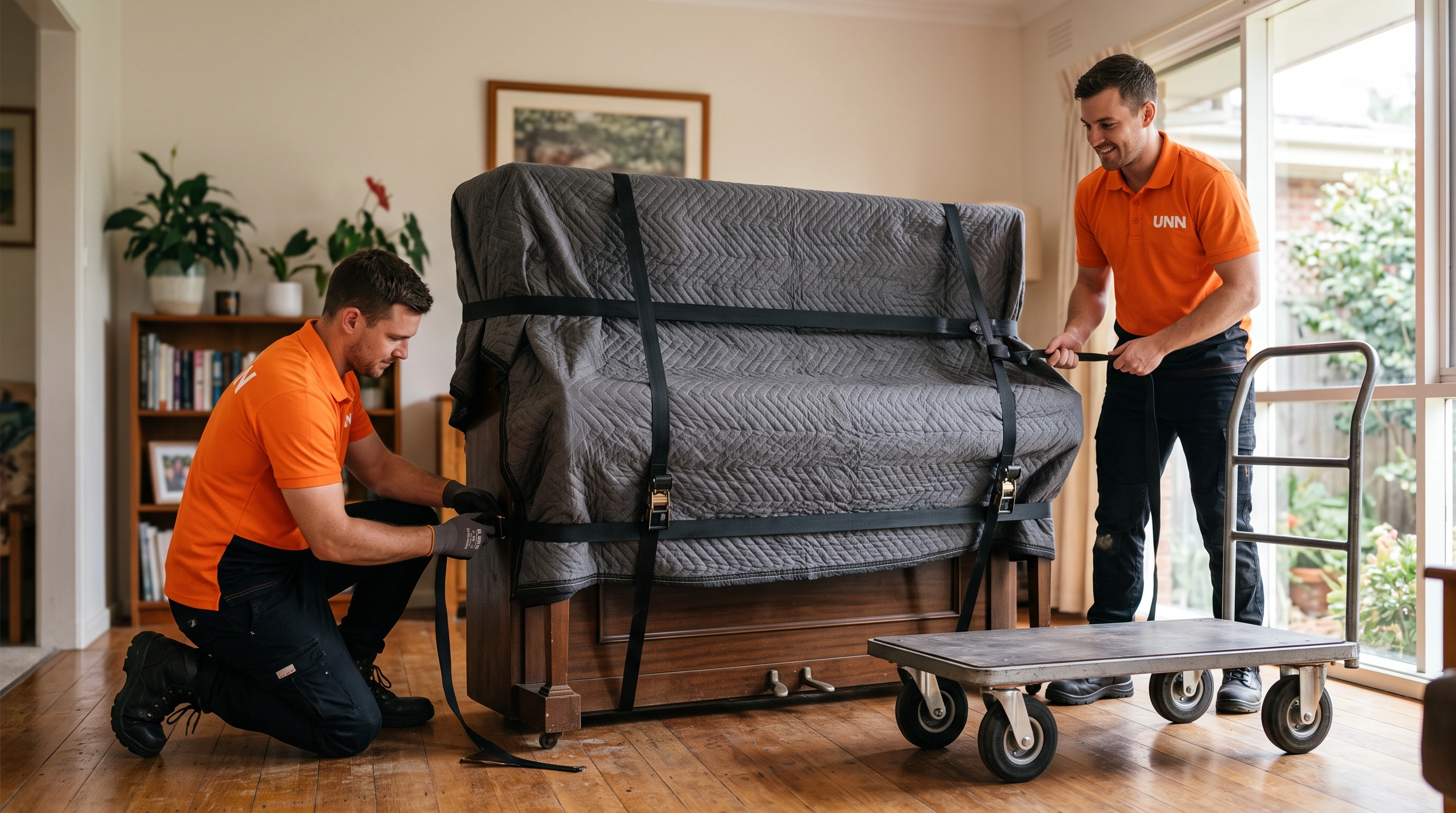
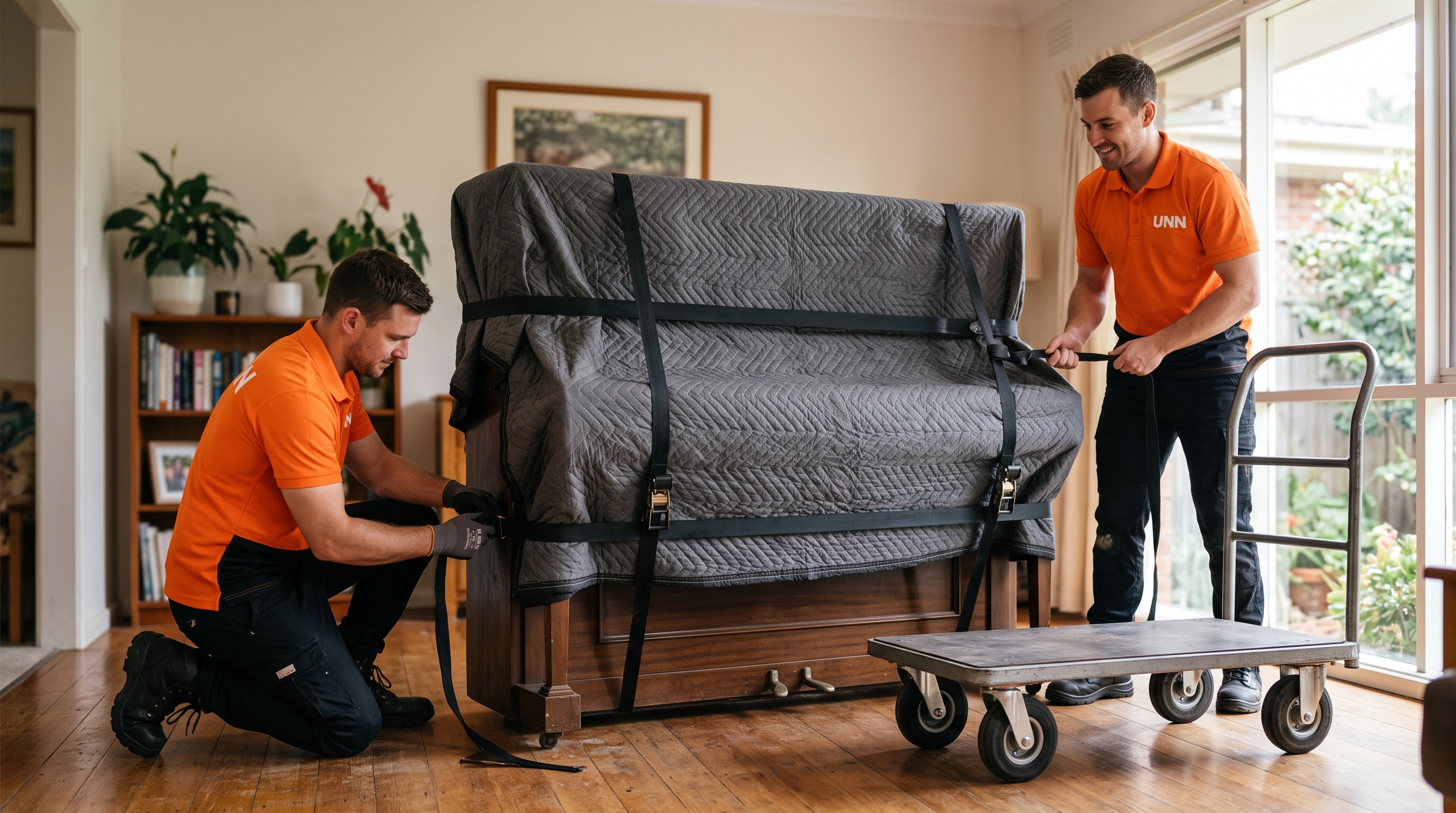
- Piano trolleys and skid boards, not furniture dollies
- Stair gear for external flights and open timber treads
- Blanket wrap and strapping before it leaves the room
- Grands dismantled and rebuilt by the same crew at both ends
- Pool tables stripped and re-levelled, never shifted whole
- Safes unbolted and re-anchored at the new address
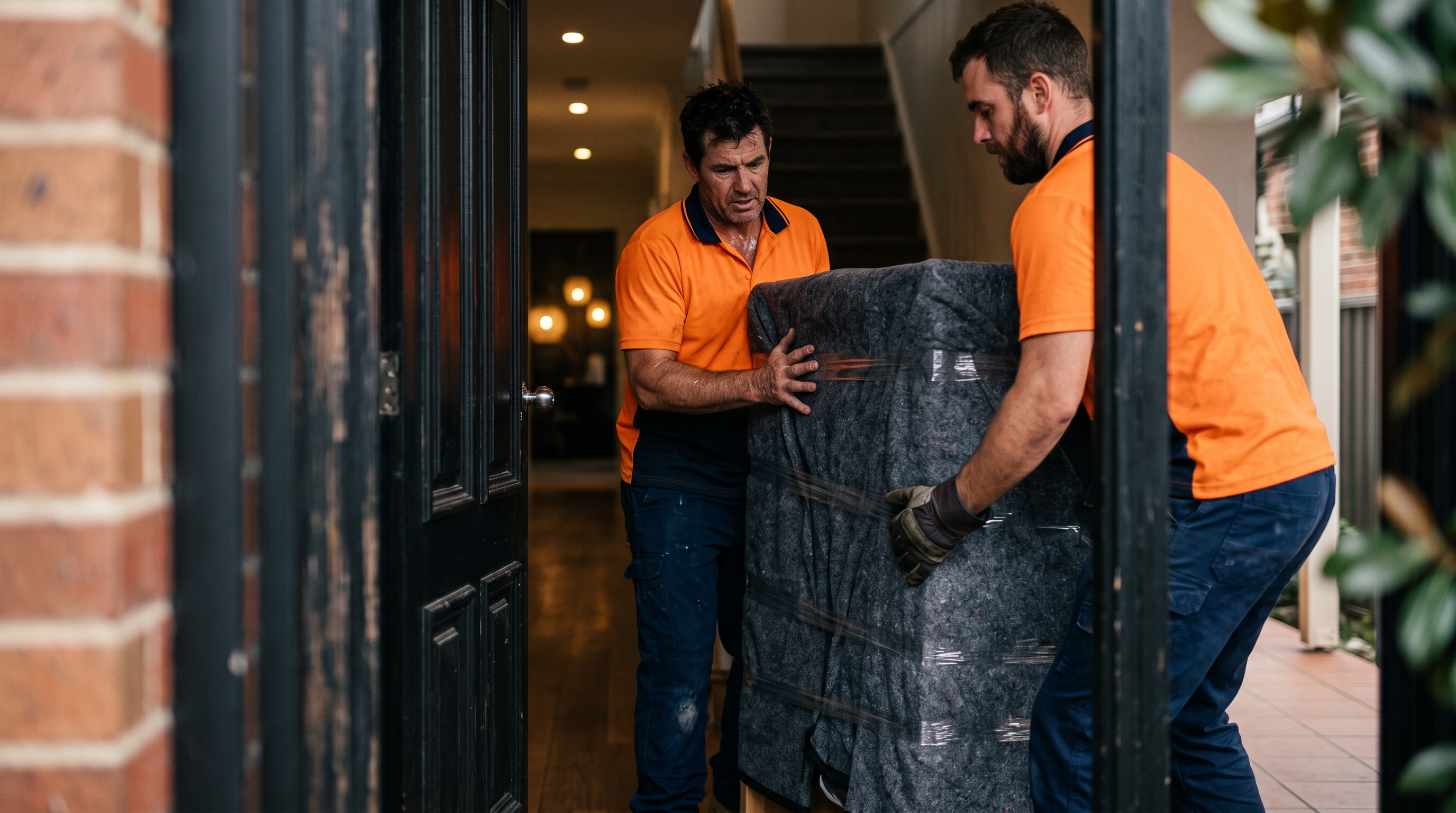
- Floor and doorway protection on the path in and out
- $1M public liability and transit cover on every job
Get a free quote in 2 hours
Photos of the instrument and the access at both ends give you a fixed price.
A piano is not furniture. It is a heavy machine.
An upright runs roughly 200 to 350 kilos and a grand can pass 500. The weight sits high and to the back, so it does not tip like a wardrobe. It goes suddenly, and it takes whoever is below it.
Inside is a cast iron frame under many tonnes of string tension and thousands of moving wooden parts. Damage from a bad move is rarely a scratch on the case. It is a cracked soundboard or a shifted action, which costs more to fix than the piano is often worth.
-
Never lifted by the legs or lid
Piano legs are joinery, not structure, and the lid is not a handle. Weight is taken under the case on a trolley, or on a skid for a grand.
-
Grands travel on their side
Lid, lyre and legs come off and it rides flat on a padded skid board. Upright is the wrong position for a grand on a truck.
-
The external staircase is the risk
One long flight, no mid-landing to set the load down, open treads, a handrail instead of a wall. That is the Darwin job, and it sets the crew size.
-
Tell us before we arrive
A crew expecting an upright that finds a baby grand up a flight will reschedule. Not a job to improvise.
Pianos and other things too heavy for a normal move
-
Upright pianos
Spinets, consoles, studio and full uprights, 200kg to well past 350kg.
-
Grand & baby grand
Dismantled, skidded and rebuilt at the other end by the same crew.
-
Digital pianos & organs
Lighter but awkward and easily flexed. Still worth moving properly.
-
Pool & billiard tables
Slate beds come apart and go back together level. Never moved whole.
-
Safes & gun safes
Unbolted, moved on skates, re-anchored to NT storage requirements.
-
Gym equipment
Multi-stations, treadmills and racks, dismantled where they need to be.
-
Tool chests & shed gear
Loaded roller cabinets, compressors and machinery out of an undercroft.
-
Marble & stone
Stone tables and benchtops, carried on edge because they crack from flex.
What decides the price
Access, not distance. An upright at ground level both ends is the cheapest version of this job. The same piano at the top of an external flight needs more people and more gear, which is where the number moves.
-
Priced on
Access
Stairs and turns, not kilometres
-
Quoted from
Four photos
Item, room, path out, stairs
-
Crew
2 to 4
Set by the access, not the item
-
Cover
$1M
Public liability and transit
Measure the tight point before you call
Quotes go wrong for two reasons. People underestimate their stairs, and plenty call a baby grand an upright. Both change the crew.
Measure three things and the quote is right first time: the narrowest doorway on the way out, the depth of the tightest turn, and how many steps with no landing between.
What affects your quote
-
What it is
An upright stays intact. A grand comes apart and goes back together.
-
Stairs
How many flights, whether there is a landing, whether they are external.
-
The tight point
Narrowest doorway, sharpest turn, lowest beam on the way out.
-
Truck access
How close a truck gets, and whether the driveway is sealed.
-
Distance
Nightcliff to Palmerston against a run out to a rural block.
-
Extra work
Re-levelling a pool table, re-anchoring a safe at the other end.
The gear this job needs
A furniture trolley under a piano is how pianos end up at the bottom of a staircase in pieces.
Piano trolleys
Built for a load whose weight sits high, taking the case rather than the castors.
Skid boards
Padded boards a grand straps to on its bass side once the legs and lyre are off.
Stair gear & ramps
For long external flights, open timber treads, and the wet-season version of both.
Skates & toe jacks
For safes and tool chests that have to be lifted off a slab before they roll.
How a heavy item move runs
-
01 Step
Send four photos
The item, the room, the path out, the stairs from the bottom. Fixed price back.
-
02 Step
We plan the route
Crew size, gear and the path out are settled before the day, not on arrival.
-
03 Step
Wrapped and moved
Blanketed and strapped in the room, then out on the trolley or skid, floors protected.
-
04 Step
Placed and rebuilt
Positioned where you want it, reassembled, a table levelled or a safe re-anchored.
Four things most movers won't give you
-

Real-time GPS tracking
A live link to the truck, so nobody waits out a four-hour window in the heat.
-

On-time guarantee
The slot we book is the one we arrive in, with the crew the job needs.
-

No cancellation fees
Settlement or posting date moved? Shift the booking at no charge.
-

We will say no
If the access does not work without a hoist, you hear that at quote time, not on the day.
Piano moves across Darwin
We cover the Darwin municipality, Palmerston and the Litchfield rural area out of Parap. The older elevated houses through Fannie Bay, Nightcliff and Rapid Creek are where access decides everything, so photograph the stairs when you enquire.
-

Darwin City & Waterfront
Darwin CBD · Larrakeyah · The Gardens · Bayview · Cullen Bay · Stuart Park · Woolner
-
Fannie Bay & Parap
Fannie Bay · Parap · Ludmilla · The Narrows · Winnellie · Eaton · East Point
-
Nightcliff & Coastal
Nightcliff · Rapid Creek · Coconut Grove · Millner · Jingili · Moil · Wagaman
-
Casuarina & University
Casuarina · Alawa · Nakara · Brinkin · Tiwi · Wanguri · Lyons
-
Leanyer & Northern Suburbs
Leanyer · Wulagi · Anula · Malak · Karama · Marrara · Muirhead
-
Berrimah & East Arm
Berrimah · East Arm · Pinelands · Yarrawonga · Knuckey Lagoon · Holtze
-
Palmerston North
Gray · Moulden · Driver · Woodroffe · Bakewell · Gunn · Marlow Lagoon
-
Palmerston South & Estates
Rosebery · Zuccoli · Durack · Farrar · Johnston · Mitchell · Archer
-
Litchfield Rural Area
Humpty Doo · Howard Springs · Coolalinga · Berry Springs · Noonamah · Virginia · Girraween
Darwin piano and heavy item questions
How much does it cost to move a piano in Darwin?
Can a normal removalist move a piano?
Will my piano need retuning after the move?
How long should I wait to tune it here?
Will the humidity damage my piano?
Can I even get a piano tuned in Darwin?
Can you get it down an external staircase?
How heavy is it, and how many people do you send?
Do you take the legs off a grand piano?
Is it insured, and what is not covered?
Do you move pool tables, and do you re-level them?
Do you move gun safes, and do you re-anchor them?
Got something too heavy to risk?
Send four photos: the item, the room, the path out and the stairs. Fixed price back within two hours.